

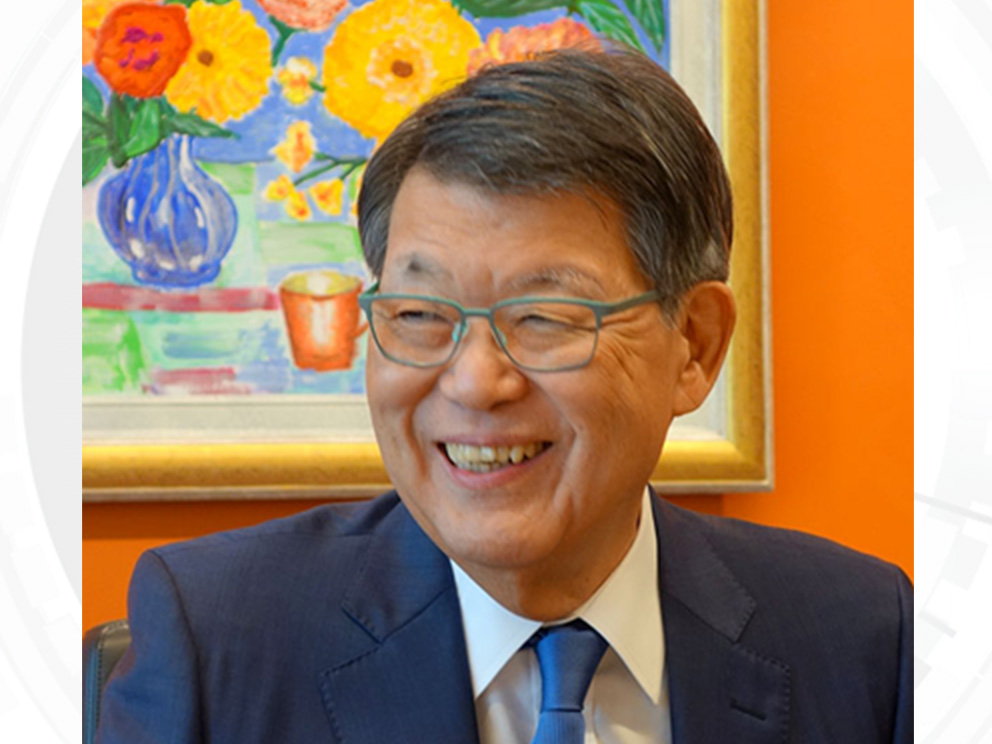
Three Key Perspectives for Investment Decisions
Since its founding in 1989, Sparx has expanded its assets under management mainly through Japanese equity investments.
As of the end of August 2025, the group’s total assets under management reached 2.058 trillion yen.
Three years ago, I launched a new Japan equity investment team which I lead myself, and I am now directly involved in managing the funds.
Our firm’s core approach is value investing, viewing the gap between a company’s intrinsic value and its share price as an investment opportunity.
To understand a company’s intrinsic value, we do not rely only on financial statements; we also conduct research by gathering real, on-the-ground information through meetings with the company.
I believe that faithfully and consistently pursuing this kind of bottom-up research is the reason we have been able to deliver results over many years.
Our investment philosophy, “Macro is the accumulation of micro,” is the very essence of Sparx.
There are three key points we focus on when assessing a company’s intrinsic value.
First, the honesty and integrity of management.
Second, which market they choose to take on. I believe success comes from choosing a market that many people overlook, but in which the management themselves are convinced there is something truly exciting.
Lastly, the uniqueness of the business model. The crucial question is whether they can build a mechanism that “monetizes” the innovative strategies that exist in their own minds.
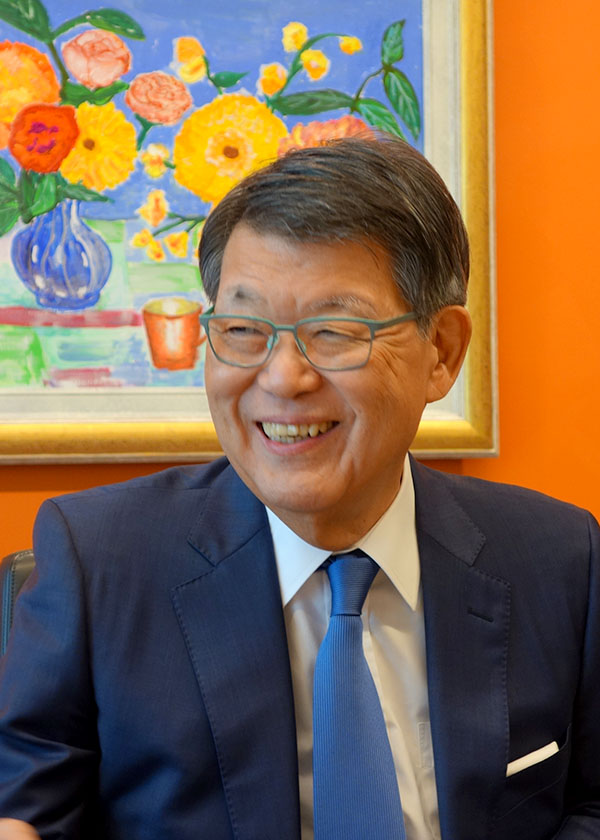
SPARX Group Co., Ltd.
Shuhei Abe
In IR, I would like management to clearly express their own thinking.
They should not be vague about their stance on shareholder returns; instead, they must articulate the company’s direction and strategic roadmap in clear language.
Listed companies should bear responsibility to society as public entities, and therefore, rather than providing formalistic disclosures, they must demonstrate a willingness to convey their own views.
At this point, I use only a limited portion of integrated reports when making investment decisions.
While investors consider some degree of future growth potential, even non-financial information—such as human capital strategies or environmental initiatives—must ultimately be assessed based on whether it can be converted into monetary value in the future.
However, since the disclosure of non-financial information is part of a company’s social responsibility, its importance will undoubtedly continue to grow.
Quickly Announcing Policy Revisions Without Hesitation
Compared to the past, Japanese companies’ approach toward IR has improved.
There used to be many companies that downplayed shareholder relations, but in recent years, discussions around shareholder returns and capital efficiency have progressed, and more managers are earnestly engaging with shareholders.
I recall one long-established company where the president personally came to consult with us about the appropriate approach to shareholder returns—it left a strong impression.
Over the past 30 years, Japan’s prolonged deflationary environment has held Japanese equities back.
However, with U.S. equities now perceived as overvalued and the world shifting toward multipolarity, Japanese stocks are beginning to be reevaluated.
Given Japan’s advantageous position in terms of GDP scale and its presence within the Asian region, I believe overseas investors can no longer afford to ignore Japan.
As the world transitions toward multipolarity, Japanese companies need to redefine their relationships with stakeholders, including shareholders, and proactively communicate their own perspectives.
Companies must clearly articulate their principles and strategies and respond to the needs of global investors.
The government and public institutions should also actively express their views regarding the stock market.