

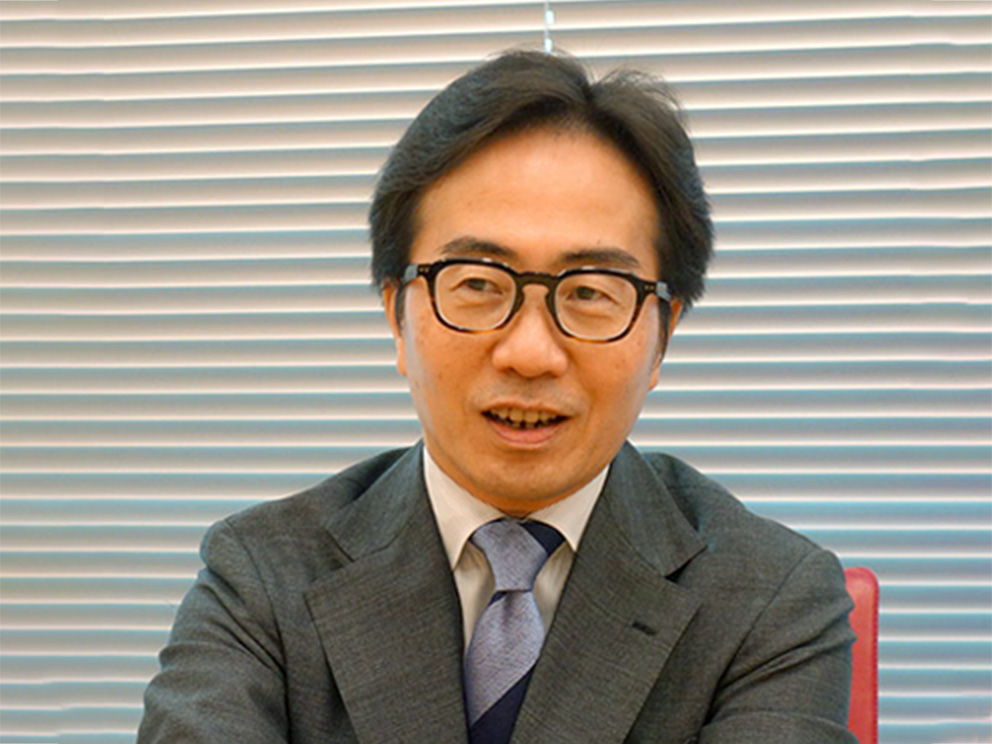
Differentiation Strategy Based on Numerical Evidence
I entered the investment industry 35 years ago.
My foundation is mid- to long-term growth investing based on bottom-up research, and over the years I have broadened my expertise into all-weather strategies.
I currently oversee four mid- to long-term growth-oriented funds and two value-oriented funds, with total assets under management of about 500 billion yen.
One type is companies that have established an excellent business model with strong competitive advantages and robust cash-generation power.
Another is companies whose industries may be mature, but whose top management is highly visible and actively engaged with the capital markets.
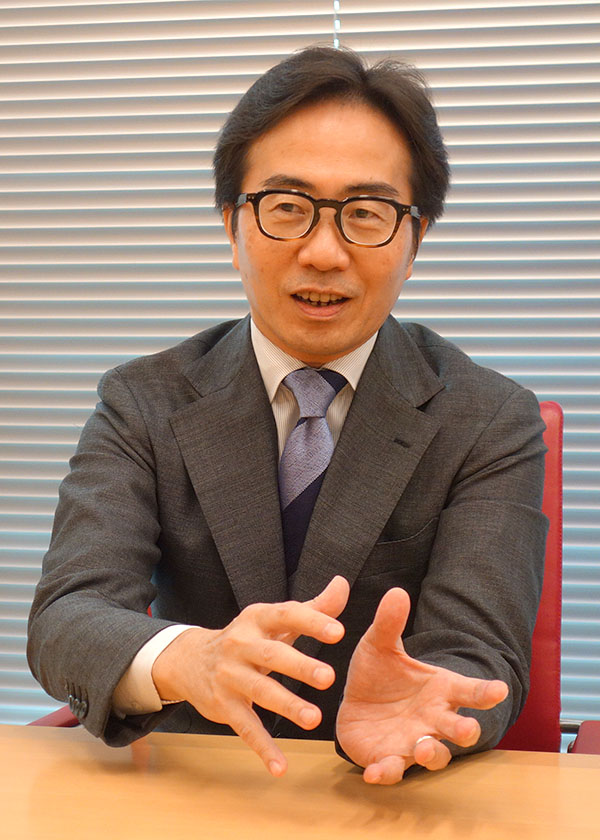
Director of Research
Masahumi Ooshiden
What we want to hear in corporate meetings is the path—the concrete steps the company will take to achieve its performance targets.
Yet many companies still respond vaguely with comments like “Those are just targets.”
For a company with multiple business segments aiming to “double operating profit margins over five years,” we want to understand the specific improvements planned for each segment and how much each will contribute to achieving the goal.
I place particular importance on the CFO interview.
Since the Tokyo Stock Exchange requested listed companies in 2023 to “manage with awareness of capital costs and stock prices,” capital policy has become increasingly crucial in driving share prices.
As a result, dialogue between investors and operating companies finally began to align.
Ideally, the integrated report should present an article structure that clearly illustrates differentiation strategies—based on numbers—relative to peers.
The same applies to special feature content.
Recently, environmental initiatives and similar topics have become so standardized that, if you hid the company’s name, you wouldn’t know whose report it was.
We want to read articles grounded in numerical industry analysis and clearly positioned in the competitive landscape.
Shifting Toward IR Suited to an Inflationary Environment
A comprehensive electric-wire manufacturer, since 2019, had been managing its business with an eye on improving ROIC (Return on Invested Capital).
However, because its business plan optimistically implied that all segments would grow, the market doubted whether ROIC improvements were sustainable, and its PBR (Price-to-Book Ratio) remained below 1.0.
Through our meetings, we conveyed the importance of presenting concrete investment and return outlooks for growth businesses.
The company then showed investors a phased scenario in which investments in growth areas would gradually contribute to future profits.
One year after initiating dialogue, by early 2024, the company’s PBR rose to the upper 1× range and was introduced by the Tokyo Stock Exchange as a positive example.
Rather than offering scattered, generic IR messages, the company clearly communicated its “priorities” and “sequence”—improving its core business first, then returning profits to shareholders.
This clarity was likely what earned investor recognition.
Companies should make active use of overseas meetings attended by investors from Europe, the U.S., and Asia.
These settings allow management to directly convey their enthusiasm for IR while efficiently gathering feedback from multiple global investors at once.
Japan’s economy is transitioning from deflation—where the value of tomorrow’s cash is higher than today’s—to mild inflation, where investing today is cheaper than postponing investment.
IR content that resonates with investors is also shifting: from a focus on financial soundness to a focus on the substance of growth investment.
Now is the right time for companies to pursue investor communication and integrated reporting that place “earning power” front and center.