

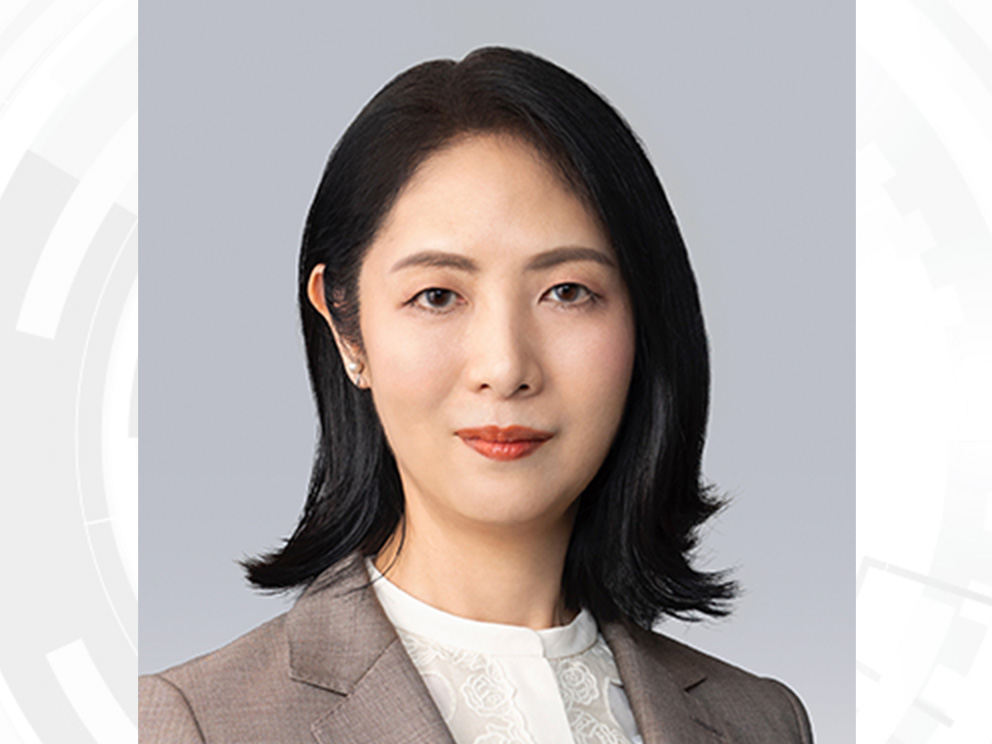
Key Points of the Interview
- Align the perspectives of board members and create a one-team mindset through candid discussions.
- Include test drives of development vehicles on the proving grounds and discussions on the production floor.
- Corporate management should actively provide opportunities for outside directors to learn about the company.

Toyota Motor Corporation President
International Institute for Socio-Economic Studies
Kumi Fujisawa
“I want you to create a new equation.”
At the very beginning of the first Board of Directors meeting I attended after assuming my position, Chairman Akio Toyoda, who presided over the meeting, immediately said, “The mission of the Board of Directors is to make Japan stronger.”
At the board meetings, the top executives speak in their own words, without formality. This encourages the directors to also “remove their armor” and express their own thoughts candidly.
When explaining agenda items, the executive in charge sometimes becomes emotional and tearful as they recount the difficulties they have faced. These honest, heartfelt discussions help align the perspectives of all ten directors and unify them as one team.
It gave me a glimpse of the strength of a company that represents Japan. As for the reason behind establishing a new board structure, Chairman Toyoda said,“I want you to create a new equation.” I interpret this to mean that, by drawing on my experiences in entrepreneurship, as an outside director, and in various public roles, I should help promote internal transformation and create new markets to further enhance corporate value.
The company also told me,“First, please understand Toyota. We will provide you with many opportunities to do so.”True to those words, the activities of Toyota’s external directors are wide-ranging.
In addition to the monthly Board of Directors meetings and Sustainability Committee meetings, I also attend sessions such as the Executive Personnel Planning Committee.
At the Product Commercialization Approval Meeting, we review mock-ups (prototypes) of vehicles, and I share my immediate impressions directly with the development team — for example, “The door opening seems high, which may make it difficult for women to get in.”
At production plants, training sessions on the Toyota Production System (TPS), known for concepts such as Just-in-Time and Kaizen, are held almost every month, and I participate whenever possible. Recently, someone on-site mentioned, “For door testing, we open and close it 300 times,” so I asked, “Why 300 times?” We had a discussion right there. Rather than accepting long-standing internal rules without questioning, I believe it is part of an outside director’s responsibility to bring fresh perspectives to the frontline. I have also had the opportunity to test-drive an EV (electric vehicle) currently under development on a test course. As I turned the exposed mechanical steering wheel of the left-hand-drive prototype, I found myself thinking, “I want this!” (laughs)
Another part of my role is receiving briefings from the heads of various divisions on the latest business environment. At a company the scale of Toyota Motor Corporation, including the head office and business units, there are more than 30 CEOs, presidents, and general managers. Even if I meet with three to four people each week, it takes nearly three months to hear from everyone. By the time I finish meeting with all of them, the information has already been updated, so it feels as though I am constantly being briefed by the executive team.
A “Tugboat” That Guides the Company in the Right Direction
In addition to regular meetings and briefings, I also visit regional motorsports events and on-site activities. We, the board members, also visit temples and shrines together to pray for traffic safety and to express our gratitude for the divine protection over the company’s operations. Since becoming an outside director, my weekends have been almost entirely filled with Toyota-related commitments. However, Chairman Toyoda and all members of the board dedicate their lives to their work. Not only Toyota Motor Corporation, but many companies today are searching for ways to respond to the rapid pace of change in the times. Outside directors—who possess knowledge and networks not found among internal personnel—may be small in size but serve as powerful tugboats, guiding the main vessel—the company—toward its intended direction. For outside directors to contribute effectively to the company’s sustainable growth, I believe that management should provide opportunities for them to understand the company’s internal culture, business strategies, and on-site initiatives, and to maintain open communication on a regular basis.